The Road Beneath the Road
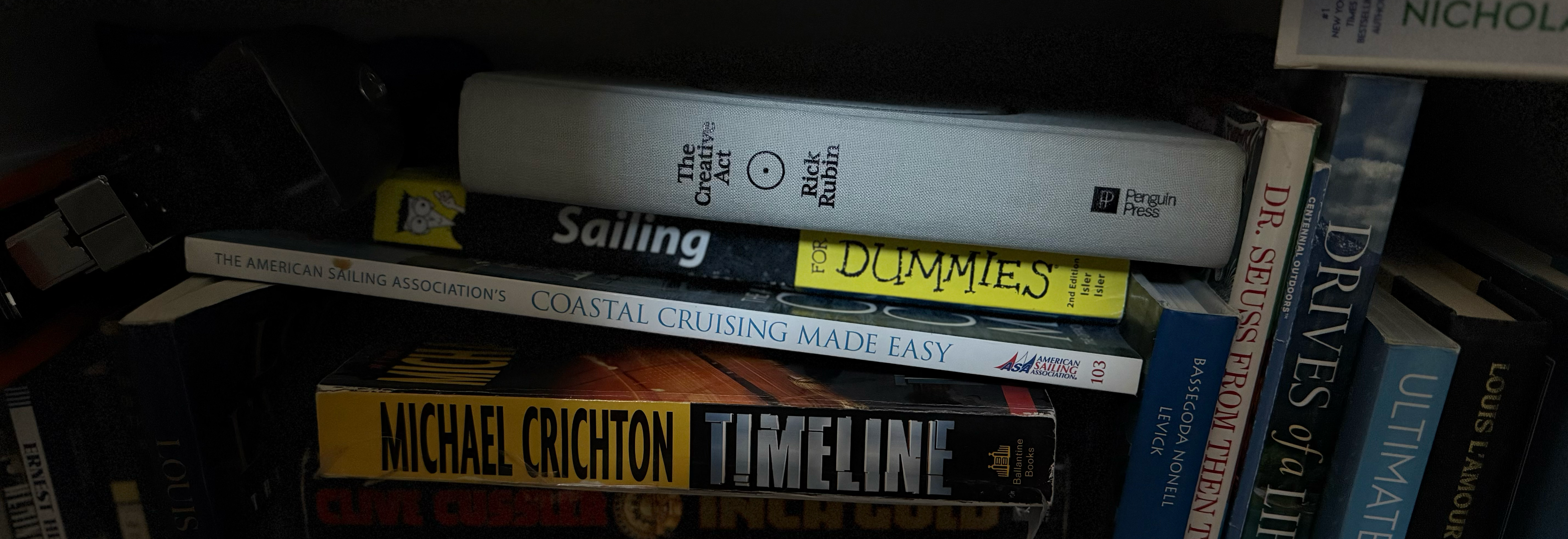
When Erica gave me The Creative Act: A Way of Being by Rick Rubin for my birthday last year, it felt fated. I restarted West of Nowhere as a result of reading it, and the book met me exactly where I was — somewhere between exhaustion and renewal, between the noise of the world and the quiet that art requires.
In it Rubin writes, “Putting commercial concerns before personal taste is a losing battle.” That line stopped me cold. Not because I needed the reminder — Erica and I have never been interested in checking the boxes — but because it affirmed something we’ve always believed.
All of our favorite artists drum to their own beat. They don’t make what’s expected; they make what’s true for themselves. That’s the rhythm we’ve always followed, even when it leads us off the map.
Another passage struck me even deeper: that our inner world — our thoughts, emotions, sensations — is just as rich and vital as the outer world of accolades, approval, and applause. In a time when everyone seems more attuned to what others think is “worthy” or “viral,” that feels like a quiet revolution.
We weren’t made to create for algorithms. We were made to create from the soul.
We believe that art, at its best, is an act of faith — a reflection of the divine spark in all of us. We are children of God, and that means our creativity cannot be contained or controlled by a program. The world may measure success in likes and numbers, but the universe measures it in truth.
We talk a lot about doing — finishing the book, launching the business, winning the award — but the quieter truth is that becoming who we are meant to be often happens in the invisible places. Growth that no one applauds. Healing that no one sees. The kind of inner work that doesn’t post well on social media but changes everything about how we move through the world.
External accomplishments are mile markers, but they’re not the road. The road is built from patience, surrender, and the long hours of listening to what our soul is trying to say. That’s the part no one else can measure.
When I was rewriting West of Nowhere, I realized that success wasn’t going to come from how many people read it or how it performed — it was going to come from how honest I could be while writing it. The work wasn’t just to build a story; it was to become the kind of person capable of telling it truthfully.
That’s what inner work is: the unseen scaffolding beneath everything visible. The more aligned it becomes, the more effortlessly the outer world follows.
And that’s what West of Nowhere became for me: an act of truth. A story that doesn’t chase trends or bend to the market, but listens to the still, small voice inside me — the one that whispers what matters when the noise dies down.
It’s a story about love, loss, and the courage to keep moving forward when the world has fallen to the wolves. But more than that, it’s a reminder: your inner work is holy work. What you make from the quiet is just as sacred as what’s celebrated in the light.